
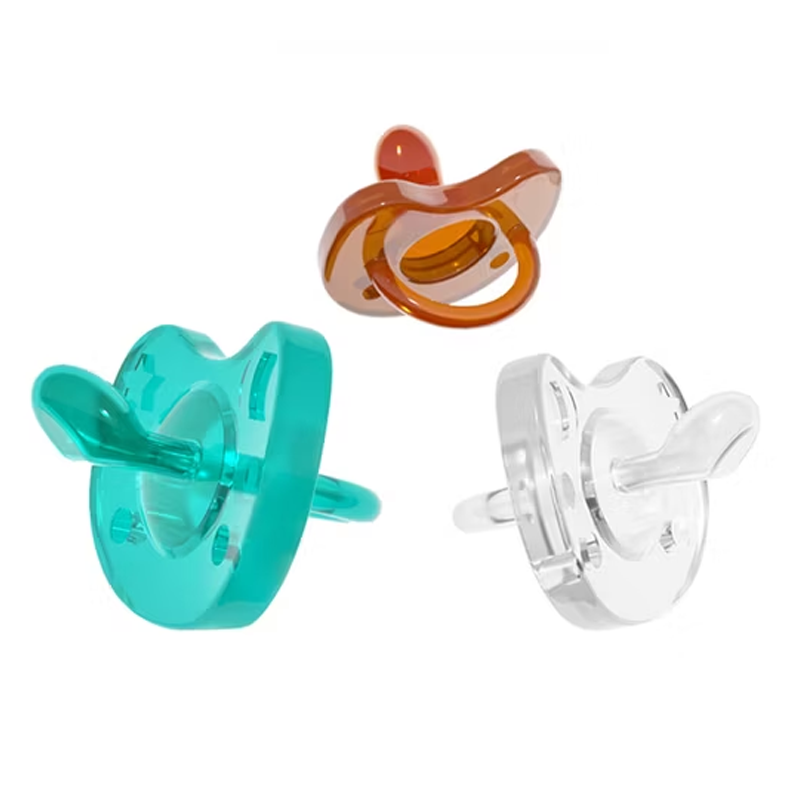
Are you researching the safest, most reliable pacifier option for your brand or baby product line? At Colosilicone, we hear that question every day — from product developers, retail buyers, and parents — and we design every pacifier with the same goal: safe oral development, long-lasting performance, and manufacturing traceability. Below is a comprehensive, manufacturer-level guide to silicone pacifiers that walks through material science, design choices by age, production methods, quality controls and regulatory considerations — everything you need to evaluate, specify, or OEM a premium silicone pacifier with confidence.
What is a silicone pacifier?
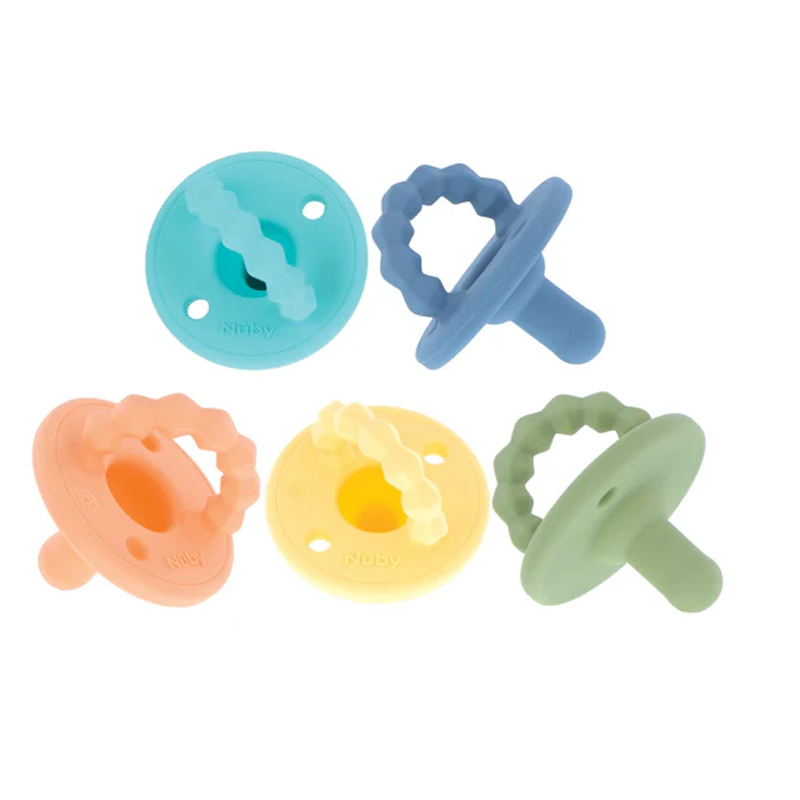
A silicone pacifier is a baby soother whose nipple (and often the entire assembly) is made from food-grade silicone rather than natural rubber (latex) or other elastomers. Food-grade silicone — particularly platinum-cured liquid silicone rubber (LSR) — is inert, heat-stable, odorless, and highly resistant to chemical degradation. These properties make silicone ideal for repeated sterilization, prolonged contact with saliva and formula, and use by infants who may have latex allergies.
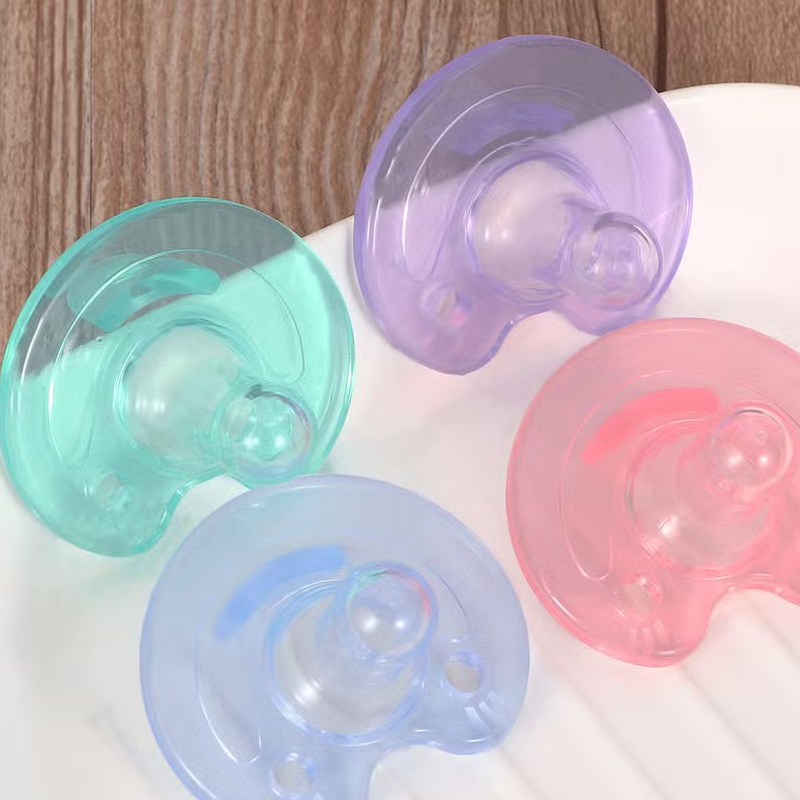
Why silicone is preferred for dental and oral health
From a dental-development perspective, silicone offers several clinically relevant advantages:
- Consistent elasticity — flexible enough to mimic a natural sucking action while resisting permanent deformation under biting.
- Dimensional stability — retains shape after repeated sterilization cycles (boiling, steam, EtO, or autoclave where appropriate), preserving intended flow and pressure characteristics.
- Hypoallergenic & inert — minimizes risk of irritation or taste transfer; suitable for medically sensitive users.
- Hygiene — smooth, non-porous surface resists microbial attachment and is easy to clean.
Used correctly and for an appropriate duration, pacifiers can help infants self-soothe without causing long-term dental harm. That said, frequency and prolonged use beyond toddler years can influence dental alignment; we recommend design and educational guidance that support gradual weaning (see below).
Key design elements and how they affect teeth and comfort
When engineering a pacifier, small design differences have big effects on comfort, safety and oral development:
- Nipple shape
- Orthodontic / physiologic (flattened/concave underside) — designed to encourage a natural tongue position and reduce pressure on the palate.
- Rounded bulb — may feel more like a bottle nipple and suit younger infants.
- Nipple size & length
- Tailored to age groups (0–3m, 3–6m, 6–12m) to fit oral cavity proportions and prevent gagging or misalignment.
- Shield design
- Properly sized shield with air holes prevents skin irritation and allows airflow. Shield diameter and curvature are critical for safety (prevents swallowing) and comfort.
- One-piece vs multi-piece construction
- One-piece molded silicone eliminates seams and small parts that could separate — preferred for safety and durability.
- Flow & venting (for combined bottle/pacifier products)
- Valves or vent channels can reduce vacuum build-up and help the infant maintain a natural sucking rhythm.
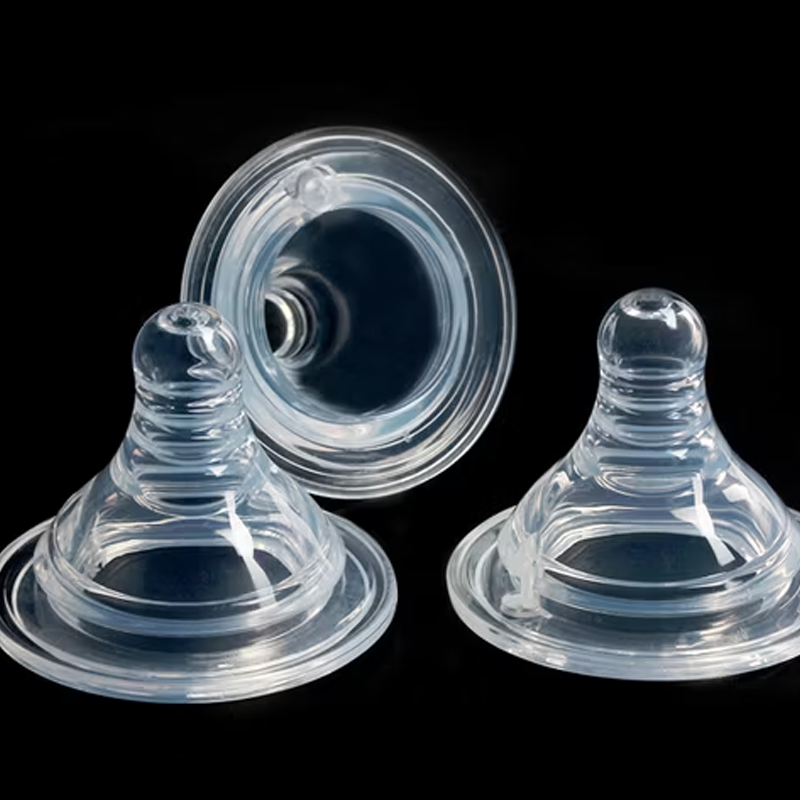
Age recommendations & usage guidance
Design the pacifier to match developmental stages:
- Newborns (0–3 months): Very soft, short/narrow nipples with high flexibility to protect sensitive oral mucosa.
- Infants (3–6 months): Moderate elasticity; slightly larger nipple to exercise oral muscles.
- Older infants/toddlers (6–12 months+): Flatter orthodontic profiles that guide tongue posture; introduce weaning strategies after 12 months, with recommended full cessation by 1–2 years when possible (no later than age 4 in most guidance).
Materials and manufacturing methods we use at Colosilicone
We leverage advanced silicone manufacturing technologies to deliver reproducible, high-quality pacifiers:
- LSR injection molding (Liquid Silicone Rubber) — ideal for high-precision, one-piece pacifiers. LSR provides excellent optical clarity, low extraction, and can be molded with micro features (air holes, valve geometries).
- Compression molding — used for certain nipple geometries and lower-volume custom runs.
- Overmolding — to bond silicone to rigid components (shields, ring handles) in a single assembly step without adhesives.
- Silicone extrusion — for components like flexible tubing or ornamental elements.
- Drip/dispensing molding — for specialty textures or soft touch finishes.
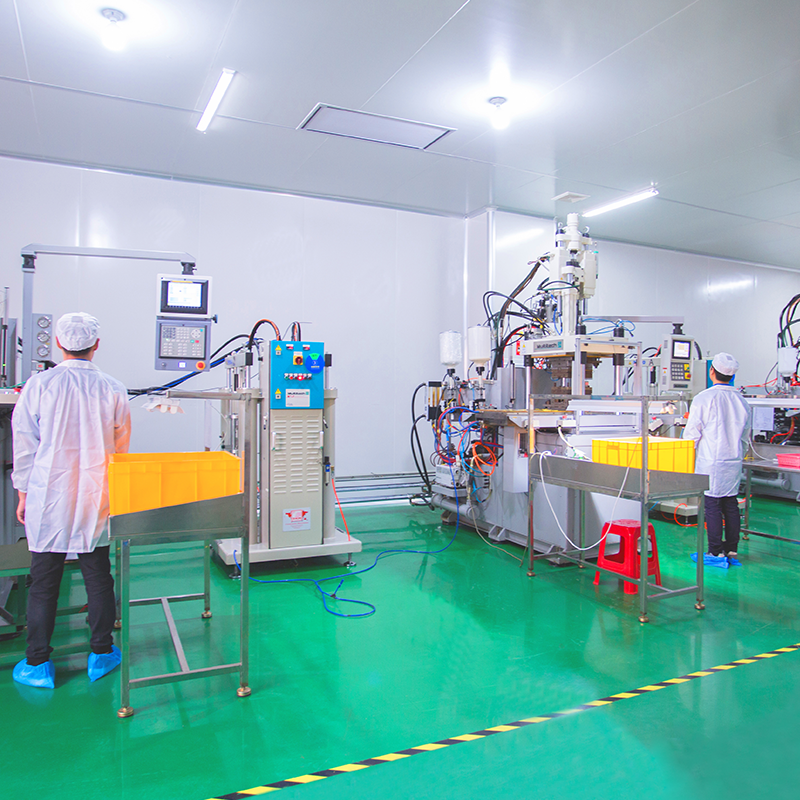
Quality assurance, testing and regulatory compliance
As a medical-grade and consumer product manufacturer, Colosilicone operates under strict quality systems and testing regimes. Key elements include:
- Certifications & audits: ISO 9001 and ISO 13485 certified systems to manage quality, traceability and medical device–grade processes.
- Material controls: Platinum-cured LSR from qualified suppliers; batch traceability and certificates of analysis.
- Biocompatibility & safety testing: We perform/coordinate ISO 10993 series testing (cytotoxicity and relevant biocompatibility assays), migration and extractables testing (GC-MS, LC-MS) where required, and ensure compliance with FDA food contact guidance and EN pacifier standards when serving EU markets.
- Physical testing: Shore A hardness, tensile strength, elongation, compression set, fatigue/bite testing and accelerated aging.
- Dimensional control & inspection: CMM checks, optical inspection and automated vision AOI for precise geometry and slit accuracy.
- Sterilization compatibility testing: Validate compatibility with autoclave, EtO, gamma sterilization or boiling per customer requirements.
- End-of-line checks: Leak testing (where applicable), seal integrity, assembly pull tests, and batch lot coding for full traceability.
Packaging, shelf life & traceability
Packaging isn’t just branding — it preserves product integrity. We offer sterile and non-sterile packaging options, tamper evidence, printed lot codes and serialization to support traceability across supply chains. Typical shelf-life validation includes accelerated aging and stability testing to set conservative expiration dates; for medical or single-use pacifiers, we can produce small batches on demand to minimize shelf-life risk.
Customization & branding (OEM + One-Stop Service)
Colosilicone is structured as a one-stop service OEM partner:
- Custom service: logo embossing, color matching (masterbatch control), multi-cavity tooling for volume, and private-label finishes.
- Design for manufacturing (DFM) collaboration with your R&D to optimize nipple geometry, shield ergonomics, and assembly efficiency.
- Regulatory support: We help package technical files (material declarations, test reports) to support market entry in target regions.
Safety and consumer guidance to include with your product
We advise customers to include clear labeling and guidance:
- Age recommendation and size guidance.
- Sterilization and cleaning instructions.
- Advice on limiting pacifier use (e.g., reduce use after 6–12 months; aim to stop by 1–2 years) and safe storage.
- Inspection checklist (discard when damaged, sticky, or discolored).
Why choose Colosilicone?
We combine production scale with medical-grade rigor. Our factory capabilities — from precision LSR molding to cleanroom assembly, validated testing labs, and ISO 9001 / ISO 13485 quality systems — let us deliver safe, reproducible pacifiers that meet both consumer expectations and regulatory scrutiny. As your manufacturing partner, we provide:
- One-stop service from prototyping to mass production
- High quality, fully documented materials and testing
- Fast-turn custom service and global supplier coordination
If you’d like, Colosilicone can review your pacifier concept and provide an end-to-end proposal — including material selection, tooling options, regulatory pathing and sample prototyping. Tell us the target age group, expected annual volume, and any branding or sterilization requirements, and we’ll prepare a manufacturability assessment and costed plan. We’re ready to help you bring a safe, high-quality silicone pacifier to market.